|
|
Genre: Adventure Developer & Publisher: inkle LTD Released: January 21, 2026 Requirements: OS: Windows 10 or above Processor: Any Memory: Minimum 2 GB RAM; Recommended, 4 GB RAM Graphics: Any DirectX: Version 9.0c Storage: 200 MB available space
|
|
|
|
Genre: Adventure Developer & Publisher: inkle LTD Released: January 21, 2026 Requirements: OS: Windows 10 or above Processor: Any Memory: Minimum 2 GB RAM; Recommended, 4 GB RAM Graphics: Any DirectX: Version 9.0c Storage: 200 MB available space
|
|
|
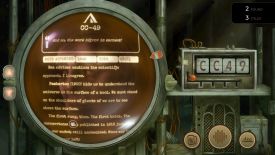
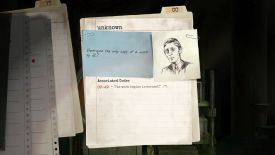
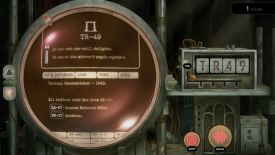
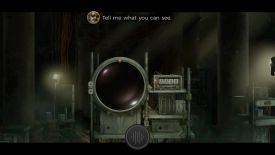
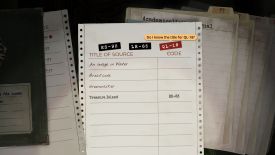
By flotsam inkle Ltd inkle certainly makes interesting games. I said in my ‘first look’ that this was an exercise in patience, which it was (and in many respects) remained. Looking back, the aptitude that stands out is tenacity. You play Abbi, who finds herself in a cellar communicating with an unseen voice through an intercom. With the lights back on, the machine on the desk beckons. It came from Bletchley Park the voice tells you, and it eats books. Not so much the classics, although some of them are there as well, but obscure and arcane bits of literary detritus. The aim was to "crack the code of reality." What you need to do (the voice says) is find the book at the heart of things before it's too late. The machine is in essence an archive, one that operates on short codes. Your task, should you accept it, is to winkle out those codes and link them to book titles, eventually/hopefully leading to the elusive sought after book. Entering a legitimate code will whisk you to that part of the archive, where further clues to further codes might be found. Or to clues as to where further codes might be found. Or the associations that might lead to those clues ... etc. Think of it as one large trail of breadcrumbs. As well as books you will find other written material, including journals and letters, as well as notes appended to the archive record by various people. Some of it will have to be unlocked, and much of it is corrupted. You get to sort that out to. It might all feel a bit bewildering at first, but rest assured Abbi is as bewildered as you. So chat a bit (just click on the intercom icon) and then start fiddling. And quickly become intrigued. The whole game takes place in front of the machine. There are no cutscenes, no flash backs, no going anywhere else. It’s you using the machine to search the archive, and visually not much else. If that sounds somewhat limiting, it both is and isn’t. It is because it is. It isn’t because there is other stuff going on. Self described as an audio drama, there is much to hear. Not just the ongoing conversation with the voice behind the intercom, which provides both insights initially and then a broader and ongoing narrative context, but the voices you unleash as you explore the archive and successfully link titles to codes. The ‘authors’ will read to you from beyond wherever they now find themselves. All the voice work is top-notch. Ambient sound is also plentiful. Sounds of wherever might bleed through the intercom, but much comes from the machine itself - mechanical bits spin and turn and click into place as you input codes, the machine hums as it goes about its tasks, and audio can crackle and hiss as if there was a bad connection. Then there is the underlying score, which sits in the background but provides just the right amount of evocative support. To be clear, it’s still just you sitting in front of a machine, but I didn’t find it remotely dull. Much of that is due to the puzzling, but the unfolding story/s are intriguing to say the least. There is much contained within the archive, and it is a rich narrative tapestry. Within your visual files sits a link to Abbi’s notebook, which quickly usurped my pen and paper. The latter gave me comfort at first, but as I settled into the game I also settled into the journal, and it became a treasure trove of gathered information. You will be alerted when something is added, and it is excellently organised to be as useful as possible. Authors, titles, codes, links etc., they are all in there. I could tell you more about how the game works but sorting all that out (including the journal) is part of this grand puzzle. I needed a push more than once and a big shove towards the end, and thought I was stuck once but it turned out it was a lack of my own confidence in what I had been doing. There is also a surprise or three along the way. There are apparently four endings, and perhaps some variation within those, and I have so far only experienced one. I am not sure how good or bad it was (that will likely be a comparative thing) but the Steam achievement suggests I could do better. FAQs indicate you don’t have to play the whole thing again to try and generate the alternatives. You can use either point and click or the keyboard (or a combination of both) and it autosaves exclusively to a single save point. It kept me engaged throughout and left me with a lot to cogitate upon. I suspect I will ponder for a while about what I think I know and then play it again. I played on: OS: Windows 11, 64 Bit Processor: Intel i7-9700K 3.7GHz RAM: Corsair Dominator Platinum RGB DDR4 32GB Video card: AMD Radeon RX 580 8192MB
|